

If you’ve ever stepped out of bed in the morning and felt a sharp pain in your heel, there’s a good chance you may be dealing with plantar fasciitis. This common condition affects runners, athletes, people who stand for long hours at work, and even those who simply spend a lot of time on their feet.
At Midland Sports Rehab and Active Orthopedics, the focus is not just on reducing pain temporarily — it’s on finding the root cause of the problem and helping you move comfortably again through a personalized, team-based approach.
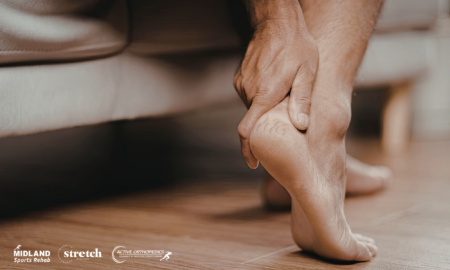
What Is Plantar Fasciitis?
Plantar fasciitis occurs when the plantar fascia — a thick band of tissue that runs along the bottom of your foot — becomes irritated or inflamed. This tissue supports the arch of your foot and absorbs stress during walking, running, and standing.
When too much strain is placed on the foot over time, small tears and irritation can develop, leading to pain and stiffness.
Common symptoms include:
- Sharp heel pain, especially in the morning
- Pain after long periods of standing
- Tightness in the arch or calf
- Increased discomfort after exercise
- Foot pain that improves slightly with movement but returns later
Many people try to “walk it off,” but without proper treatment, plantar fasciitis can become chronic and begin affecting your gait, knees, hips, and lower back.
What Causes Plantar Fasciitis?
Plantar fasciitis is often caused by a combination of mobility restrictions, muscle tightness, overuse, and poor movement mechanics.
Some common contributing factors include:
- Tight calves or Achilles tendons
- Limited ankle mobility
- Flat feet or high arches
- Standing for long periods
- Improper footwear
- Running or sports overuse
- Weakness in the foot and lower leg muscles
Research and clinical discussions from physical therapists and sports medicine providers consistently emphasize that plantar fasciitis is rarely “just a foot problem.” Tight calves, poor ankle mobility, gait mechanics, and overall movement patterns often play a major role.
That’s why a comprehensive treatment plan matters.
How Midland Sports Rehab & Active Orthopedics Can Help
At Midland Sports Rehab and Active Orthopedics, patients benefit from a multidisciplinary approach that combines chiropractic care, physical therapy, assisted stretching, massage therapy, acupuncture, and sports rehab techniques under one roof.
Instead of simply masking symptoms, the team works to identify why the plantar fascia is being overloaded in the first place.
Thorough Evaluation and Movement Assessment
The first step is understanding the full picture.
The providers evaluate:
- Walking and gait mechanics
- Ankle and foot mobility
- Calf flexibility
- Strength imbalances
- Posture and movement patterns
- Athletic or work-related stressors
Their team-based approach allows multiple providers to collaborate on treatment plans to ensure patients receive individualized care.
Chiropractic Care for Foot and Ankle Mechanics
Chiropractic treatment can help restore proper joint mobility throughout the foot and ankle. Restrictions in these areas can increase stress on the plantar fascia and alter how your body absorbs force during movement.
Our chiropractic team at Midland Sports Rehab and Active Orthopedics, focuses on restoring movement, improving biomechanics, and reducing irritation throughout the kinetic chain — not just at the site of pain.
Physical Therapy to Restore Strength and Function
Physical therapy plays a major role in long-term plantar fasciitis recovery.
Treatment may include:
- Strengthening the foot and ankle
- Improving balance and stability
- Corrective exercises
- Gait retraining
- Mobility work
- Return-to-activity progression
The goal is not only to calm symptoms but also to prevent the pain from returning.
Assisted Stretching for Tight Calves and Foot Tension
One of the biggest contributors to plantar fasciitis is tightness in the calves and posterior chain.
At Midland Sports Rehab, assisted stretching sessions help improve flexibility, reduce tension, and restore normal movement patterns. Their stretch therapists work directly with patients to target the muscles that commonly contribute to heel and arch pain.
When calf tightness decreases, stress on the plantar fascia often decreases as well.
Additional Recovery Options
Depending on the patient’s needs, treatment may also include:
- Massage therapy
- Acupuncture
- Soft tissue work
- Sports rehabilitation strategies
- Home exercise programs
- Injury prevention education
Because plantar fasciitis can stem from multiple causes, having access to several treatment options in one clinic can help speed up recovery and improve long-term results.

Don’t Ignore Heel Pain
Plantar fasciitis often starts as “just a little heel pain,” but over time it can affect daily activities, workouts, sleep, and overall quality of life.
The sooner the issue is addressed, the easier it typically is to correct movement problems and reduce chronic irritation.
At Midland Sports Rehab and Active Orthopedics, our team focuses on helping patients get back to walking, training, working, and living without constant foot pain through evidence-based, personalized care
👉 Book your appointment today at Midland Sports Rehab or Active Orthopedics
📞 Call 989.341.1070 to schedule
📍 Midland Sports Rehab
4710 Eastman Avenue, Midland, MI 48640
📍Active Orthopedics
317 E Wackerly St, Midland, MI 48642


