

When most people think about preparing for surgery, they focus on the procedure itself. They trust the surgeon, schedule the date, and assume recovery will take care of itself.
But here’s the reality: your recovery doesn’t start after surgery—it starts before it.
And one of the biggest factors? The muscles you don’t think about.
The Muscles You’re Probably Ignoring
If you’re heading into surgery—whether it’s for your knee, shoulder, or back—your first instinct is to focus on the injured area.
Knee surgery? Strengthen the quads.
Shoulder surgery? Work on the rotator cuff.
That’s important—but it’s only part of the picture.
The real game-changers are often the “supporting muscles”:
- Core stabilizers
- Glutes and hips
- Scapular (shoulder blade) stabilizers
- Deep postural muscle
These muscles don’t always hurt, so they get overlooked. But they play a critical role in how your body moves, heals, and compensates.

Why These Muscles Matter More Than You Think
Your body doesn’t work in isolation—it works as a system.
If your supporting muscles are weak or not functioning properly:
- You place more stress on the surgical area
- Your movement patterns become inefficient
- Recovery becomes slower and more frustrating
Pre-surgical physical therapy (prehab) focuses on improving movement patterns, strength, and mobility before surgery, which has been shown to improve outcomes and speed up recovery.
At Midland Sports Rehab and Active Orthopedics, this full-body approach is a key part of how patients are prepared for surgery—so they’re not just healing, they’re healing well.
The Hidden Cost of Skipping Prehab
A lot of people think, “Why put in work now if I’m about to have surgery anyway?”
Here’s what often happens instead:
- More muscle loss after surgery
- Increased stiffness and pain
- Longer time to return to normal activities
Without proper preparation, your body is starting recovery from a deficit.
On the flip side, patients who complete prehab often experience:
- Faster recovery timelines
- Better strength and mobility post-surgery
- Lower risk of complications
Some patients even improve enough that surgery becomes less urgent—or unnecessary in certain cases.
What Pre-Surgical PT Actually Focuses On
At Midland Sports Rehab and Active Orthopedics, prehab isn’t just about doing random exercises—it’s a targeted, personalized plan based on how your body moves.
A proper program typically includes:
- Strength training for both the surgical area and surrounding muscle groups
- Mobility work to improve joint range of motion
- Movement retraining to fix compensations
- Pain management techniques to reduce discomfort before surgery
- Education so you know exactly what to expect after your procedure
This approach helps your body go into surgery stronger, more balanced, and more prepared to heal.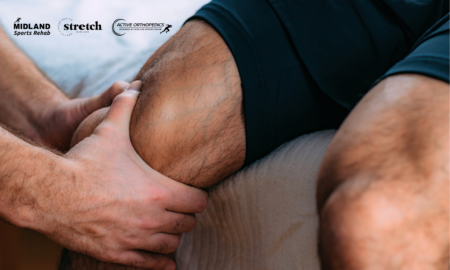
A Simple Way to Think About It
Imagine two people going into the same surgery:
- One has weak stabilizers, limited mobility, and poor movement patterns
- The other has strong supporting muscles, better control, and less pain
Same surgery. Completely different recovery experience.
The Bottom Line
The muscles that matter most before surgery aren’t always the ones you feel—they’re the ones that support, stabilize, and control your movement behind the scenes.
Ignoring them can slow you down. Training them can change everything.
If you want a faster, smoother recovery, don’t just prepare for surgery—
prepare your body for what comes after.
Ready to Start Prehab?
At Midland Sports Rehab or Active Orthopedics, our team takes a full-body, movement-based approach to pre-surgical physical therapy. We evaluate how your entire system works—not just the injured area—so you can head into surgery with confidence.
Schedule your pre-surgical evaluation today and set yourself up for a better recovery.
👉 Book your appointment today at Midland Sports Rehab or Active Orthopedics
📞 Call 989.341.1070 to schedule
📍 Midland Sports Rehab
4710 Eastman Avenue, Midland, MI 48640
📍Active Orthopedics
317 E Wackerly St, Midland, MI 48642


